
Green Flags in a Pilates Teacher Training Program
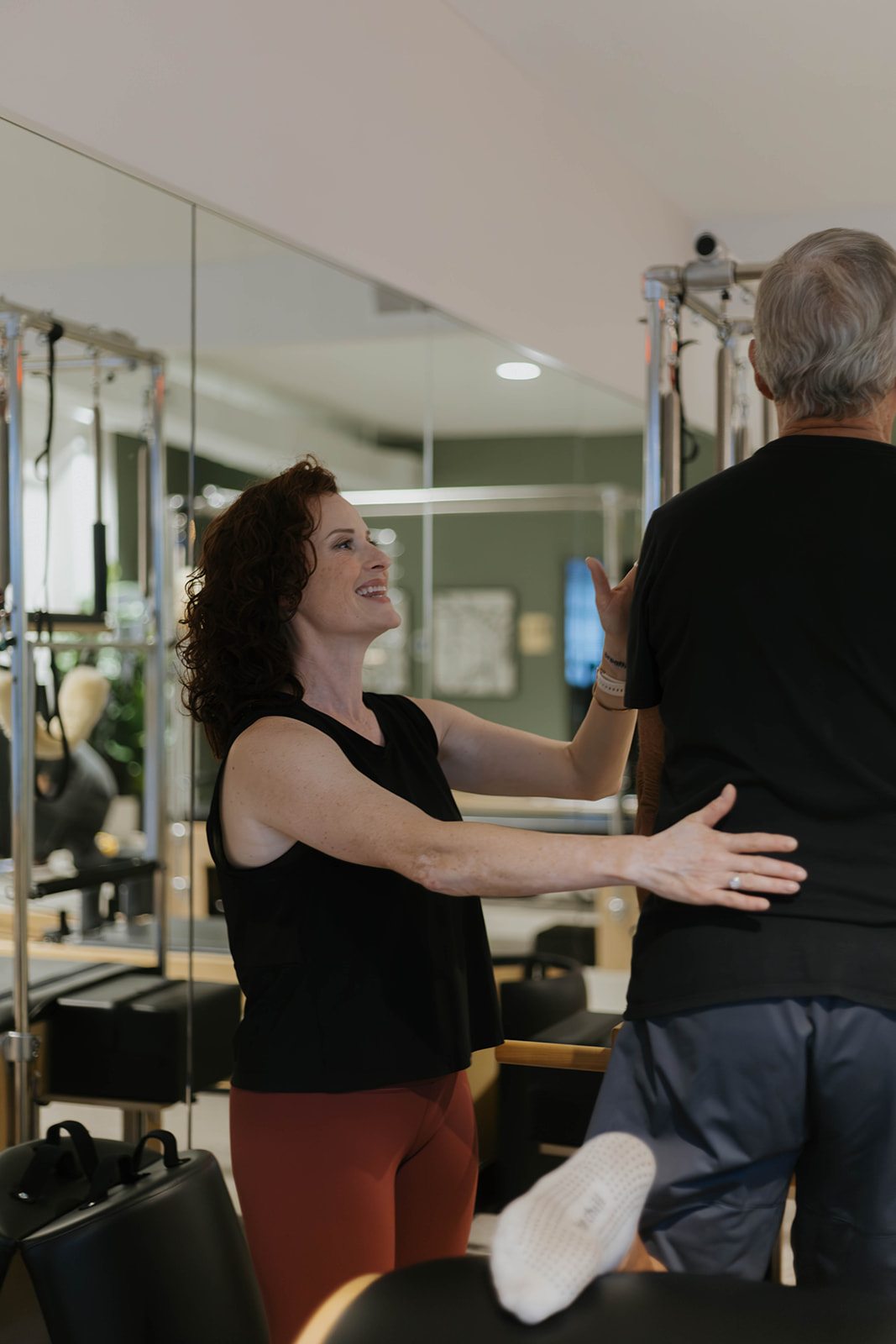
Pilates has become the fastest growing fitness modality in the country, with nearly 4 million people starting Pilates since 2019.* Let’s be clear – THIS IS AMAZING, and we absolutely love to see it! With the rise in Pilates, the need for well-educated and comprehensively certified Pilates Teachers has drastically increased. Many people are surprised at how long it takes to become a certified Pilates Teacher; it is upwards of a $5000 financial commitment, and time, so.much.time. The average trainee can expect to work towards their certification for a minimum of 12 months – that includes the in-studio classroom hours, self-practice, practice teaching, and observation…notice I didn’t say mentoring, but more on that later. Training cannot be rushed – it takes time to develop your skill, and that doesn’t happen overnight.
Pilates is a system that incorporates mind, body, and control centered around the mat, Reformer, Cadillac (or Tower), Chair, and Barrels. If someone says they are a Comprehensively Certified Pilates Teacher, that means they have completed a minimum of 450 hours of training on the varying pieces of apparatus. With every good thing, there comes a few bad things, so we’re breaking down a few things about our industry that aren’t widely known, but should, ESPECIALLY if you’re thinking about pursuing a career as a Pilates Teacher and are looking at different programs:
- 💚: your teacher is open and honest about their training, where they completed it, and they had a mentor throughout their training.
- 🚩: your teacher has never completed a proper Mat training yet they’re teaching Reformer, they’ve never heard of the Cadillac or Chair, and their training wasn’t by a reputable program.
- 💚: The training is recognized nationally (bonus points for internationally), encourages or requires continuing education that extends beyond choreography, ideally with an emphasis on learning a new skill or expanding on a specific Pilates principle.
- 🚩: The training was created by the studio owner, isn’t recognized by the NPCP (National Pilates Certification Program), and if you were to move to a different state (or even area of town), your training wouldn’t be recognized by another studio. They are not one size fits all.
- 💚: the training is taught by a Teacher Trainer, there is a structured schedule for mentorship throughout your program, the teacher trainer is consistently checking and observes you teaching to ensure that you are growing and finding your voice as a new teacher, and they provide ongoing feedback.
- 🚩: You’re able to complete your hours on your own without anyone checking in to see HOW you teach and ensure you’re teaching exercises correctly
- 💚: You were able to take a class from the Teacher Trainer, they’ve been teaching for years and have extensive knowledge of the body, injuries, and Pilates
- 🚩: The Teacher Trainer has only been teaching for a few years and doesn’t posses in-depth knowledge of common injuries or conditions that many Pilates students possess.
- 💚: The program you are interested in caps their groups at 10 or 12, and only runs one a year to ensure they are delivery a quality program, not over saturating the market, and chooses quality over quantity. (I’ve always said if Teacher Training is how my studio stays profitable, then I’m not running my studio correctly.)
- 🚩: The program you are interested in doesn’t cap their participants, holds multiple trainings per year or concurrently, and has poor carry-over from the training to the teachers in the studio.
- 💚: Upon completion of the in-studio hours, you will be able to complete all of your hours at that studio, and the Teacher Trainer is available and onsite.
- 🚩: Many studios host Teacher Training programs and the Teacher Trainer is not local; while this makes training accessible, it also means there is nobody available to mentor you, observe you, and guide you as you find your footing.
While this is not an exhaustive list, through MANY open and honest conversations, it’s clear that many studio owners are exploiting their Teacher Training Programs, and I believe this becomes a question of ethics. Which is also a problem – the Pilates industry is unregulated, and while that’s a plus in some respects, it’s also problematic in others.
If you’re looking at Pilates Teacher Training programs and are struggling to know what to ask, I’ve put together two lists that you should use when speaking with different studios about their programs. I encourage you to ask the hard questions and make sure you are taking classes at these studios BEFORE you give them any money. If you’re interested, I will be holding another Teacher Training Program that begins in October. If you have any questions, send us an email, I’m happy to answer them, and for more information, click here.


